

Fix Flaws in "CEO Termination" and "Cash Hoarding"! Zero-Cost Reforms for PM Takaichi
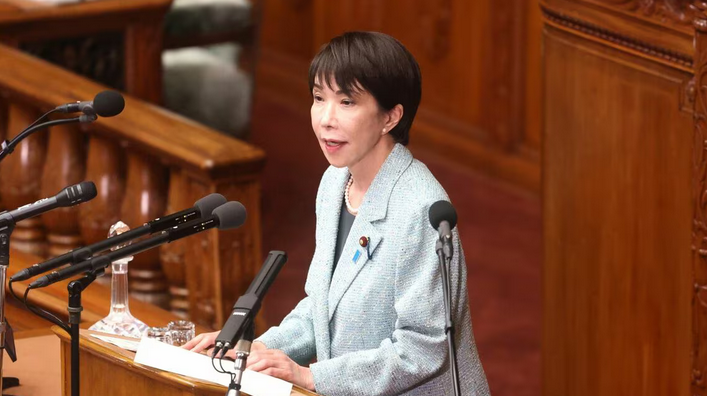
(Translation of Japanese-language article published in Toyo Keizai Online, Dec. 16, 2025)
By Nicholas Benes, Director and Founder, Board Director Training Institute (BDTI)
Immediately after the first cabinet meeting since forming her new cabinet, Prime Minister Sanae Takaichi instructed her Ministers to formulate measures for the economy. Based on those discussions, a 18.3 trillion Yen supplementary budget was passed by the Diet on November 28.
The Prime Minister also chaired the inaugural meeting of the Council for Japan’s Growth Strategy, where she asked her Ministers to flesh out the strategy and plan a roadmap for public-private investment partnerships. The aim is to boost growth across 17 key industries and technology sectors while reducing economic security risks, including those related to supply chains.
Furthermore, referring to plans to revise the Corporate Governance Code (CGC), she stated at the House of Councilors Budget Committee, “We will encourage companies to appropriately allocate resources not only to shareholder returns but also to their employees,” expressing the view that this would create a virtuous cycle of increased consumption and tax revenue.
Listed Companies Continue to Hoard Cash
Swift leadership is welcome. However, nearly all of the economic measures proposed so far require substantial tax revenues. Moreover, with severe labor shortages already pushing up wages, explicitly adding “wage increases” to the Corporate Governance Code risks distracting listed companies from the real problem.
That “real problem” is more basic: many listed companies continue to hoard cash and need to spend it productively in some way. Otherwise, this cash will continue to accumulate, suppressing both consumption and stock prices.
Conversely, if listed companies were to increase investment in line with their fundamental societal mission of “investing to grow faster”, it would bring significant benefits to workers, shareholders, and Japanese society as a whole.
In this virtuous cycle, the size of the profit “pie” expands first, generating more to share with key stakeholders. This is the only realistic mechanism for motivating most companies to make sustainable wage increases, because it is extremely difficult for companies to raise wages when revenues and profits are shrinking.
The sooner executives address the misallocation of assets (and employees) within Japanese companies, along with the slow adoption and diffusion of new technology, the faster this virtuous cycle will turn.
Indeed, Prime Minister Takaichi has rightly emphasized the need for Japanese companies, not the government, to invest more in growth. She has urged companies to redirect more of their surplus cash toward business expansion, research and development, or wage increases. At times, she has even engaged in a bit of sabre-rattling, hinting at taxation of excess cash and deposits.
Fortunately, there is a cost-free way to address these issues: better corporate governance. However, this policy remains underutilized.
Japanese Corporate Boards are Not Functioning Adequately
Management tends to “invest” surplus cash to motivate employees, foster innovation, or expand production capacity when it is strongly urged to do so by the board of directors.
Boards tend to act more swiftly when shareholders and employees demand changes and elect directors with sufficient independence and qualifications to accelerate those changes.
Based on this logic, the adoption of the 2015 Corporate Governance Code (CGC) became the third and most enduring “arrow” of Abenomics. This major step was taken by the LDP’s “Headquarters for Japan’s Economic Revitalization” (the organization that decided on the 2014 growth strategy), and Takaichi herself was one of its leaders.
The CGC required boards to include at least two independent directors, and urged companies to listen more closely to shareholders, who were in turn encouraged to sign on to Japan’s new Stewardship Code. This Stewardship Code commits shareholders to actively engage with companies and commit to exercising their proxy voting rights objectively.
Dialogue with investors was the other wheel of the “two-wheel” approach that my memo referred to when I proposed the governance code concept to key parliamentarians in 2013.
However, even with the “multiple independent directors” stipulated by the CGC, outside directors remain a minority on most boards, and have not been successful in pushing companies to use surplus cash faster than it accumulates.
Furthermore, dialogue with investors and comparisons between companies by investors remain hampered by a confusing array of three different legal governance structures.
Investors must spend excessive time understanding the specific governance structure (institutional design) used by each individual company, and verifying exactly how it has been implemented. No other developed nation has this problem.
However, between 2025 and 2026, revisions to the Companies Act are scheduled to be discussed at the Ministry of Justice’s Legislative Council, and the Financial Services Agency plans to revise the Corporate Governance Code.
A Golden Opportunity to Excite Investors
This presents Prime Minister Takaichi with a golden opportunity to push through the four reforms outlined below. These reforms would function as an unparalleled stimulus compelling companies to reallocate cash toward its most productive uses – likely including wage increases and bonus hikes – , while exciting investors at the same time.
① Standardizing the Legal Governance Structure of Listed Companies
First, the government should begin the process of standardizing and unifying into a single format the three legal “institutional designs” available for listed companies’ governance structure (statutory auditor companies, “three committee” style companies, and audit committee companies).
An effective way to initiate this “unification” process would be for the Legislative Council’s Corporate Law Subcommittee to adopt the proposal made by the Ministry of Economy, Trade and Industry in 2017: creating the legal position of a shikkoyaku (“Executive Officer” with fiduciary duty to shareholders under the Companies Act) for statutory auditor and audit committee companies. (For clarity, the widely used shikkoyakuin title (confusingly, also translated as “Executive Officer”) is different: it not a legal position under the Act, and therefore does not engender any fiduciary duty to shareholders.)
Three-committee style companies already have executive officers who bear fiduciary duty. Furthermore, the Chief Executive Officer (CEO) need not be a director. This makes replacing underperforming CEOs and other executives significantly easier than in the other structures, because he candidate “pool” automatically expands to include individuals who are not directors, enabling swift selection and appointment when necessary.
In fact, in 2017 and 2018, the Ministry of Economy, Trade and Industry (METI) submitted memos to the Legislative Council’s Corporate Law Subcommittee outlining the rationale for this change, but they were completely ignored. In 2017, METI wrote:
In statutory auditor and audit committee companies, the only officers who are corporate bodies under the Companies Act who can be held responsible for business execution are directors. Therefore, if efforts are made to reduce the number of executive directors so that the board of directors can focus on supervision, a situation arises where the number of managers themselves does not decrease, yet the number of directors who can be held responsible(※) for business execution under the Companies Act decreases.
(※Author’s note: those who can be held accountable via shareholder derivative suits.)
Therefore, for statutory auditor companies and audit committee companies, it is conceivable to consider allowing the board of directors to appoint executive officers who are legally responsible for business execution, and to enable the selection of such executive officers who can act as as representatives of the corporation [as CEOs].
Governance Gaps Remain
Since 2017, the need for a legal mechanism to appoint non-directors as “Representative Executive Officers” or “Executive Officers” with fiduciary duty has grown. This is because as the proportion of outside directors has increased, the number of executive directors has decreased. This means there are fewer individuals who are legally responsible for business execution in the sense that they bear legal liability to shareholders.
Despite discussions about transitioning to a “monitoring board” governance model, “monitoring” cannot function effectively when the board cannot immediately replace the CEO during a crisis simply because the desired replacement CEO must first be elected as a director at a shareholders’ meeting. This is a significant governance flaw affecting over 97% of listed companies in Japan.
② Resolving the Issue of the “Concentrated Shareholder Meeting Day”
Next, the Prime Minister and the Financial Services Agency should strongly encourage listed companies to amend their articles of incorporation to allow them to convene shareholders’ meetings beyond the current deadline of “within three months after the fiscal year-end”.
For most companies closing their fiscal year on March 31, this simple change would mean those companies could hold their AGMs in July or August. This would end the so-called “concentrated shareholder meeting day” problem that has been a source of dissatisfaction for both domestic and international investors for decades.
It would also make it easier for companies to file their comprehensive financial reports earlier, rather than just days before the meeting (or, as should never happen but often does, after the meeting), as is currently common practice.
For investor dialogue and proxy voting to be more effective, financial reports under the Financial Instruments and Exchange Act [the securities law] must be submitted at least one month before the shareholders meeting, and never after it.
Furthermore, this change will facilitate the consolidation of financial reports and business reports into a single disclosure document, eliminating investor confusion and the enormous burden on companies that is caused by having to disclose information in two separate, duplicative documents.
Lagging Behind Global Standards
③ Mandating a Majority of Independent Directors
Third, Prime Minister Takaichi should request that a majority of directors on listed companies’ boards be independent directors, aligning Japan with the global standard of advanced nations. This is the most essential revision to the CGC and what investors most desire.
Because the Financial Services Agency is currently revising the CGC, now is precisely the optimal time to push through this crucial improvement. This policy will place the “spotlight” of accountability for oversight and supervision squarely on the outside directors. Should any issues arise, they will be held accountable to a greater extent than if they remain a minority.
As a result, boards will be strongly motivated to enhance the quality, skills, and diversity of their members, rather than selecting compliant “friends of friends” as independent directors. This will lead to finding outside directors who are more willing and prepared to fulfill their responsibilities.
④ Mandatory Disclosure of Executive Training Information
Fourth, to ensure the quality of both internal and external directors improves, the Prime Minister should instruct the Financial Services Agency and the Tokyo Stock Exchange to require listed companies (as a new principle of the Corporate Governance Code) to disclose the details of the governance and finance-related training that was actually received by executive officers and all board members in the previous year. This should also cover similar positions at large subsidiaries.
Currently, many companies claim to have a “Training Policy for Directors and Statutory Auditors” but have actually done almost nothing – or nothing – for years. In an era where everyone talks about “human capital management,” it is truly bizarre that development of the “human capital” responsible for making the most critical decisions within the company is being ignored. Imposing a disclosure obligation on what was actually implemented in the prior year will enable investors to identify the companies that are genuinely committed to improving their governance.
Led by Politicians, Not Bureaucrats
The reforms outlined in points ① through ④ above are major in scope. Just as when the CGC was first proposed in 2013-2014, they cannot be initiated by bureaucrats alone. For bureaucrats, independently driving transformation of this scale carries far too great a career risk. Political leadership from the Prime Minister’s Office and consensus-building among key Diet members are indispensable.
Furthermore, if the Prime Minister wishes to achieve concrete results from public-private partnerships, it is vital that the governance of the “private” side of these partnerships (the entities using the funds) is as effective and efficient as possible. Otherwise, it makes no sense to encourage such companies to benefit from public funds when many private firms already hold large amounts of underutilized cash.
Public funds should be invested only in partnerships with private companies capable of utilizing that capital efficiently. These partnerships must not become another form of subsidy.
Prime Minister Takaichi now has a unique opportunity to catapult Japan’s corporate governance reforms into their next transformative phase. She calls for “a sense of urgency.” To truly respond to that call, Japan must seize this opportunity in full.
=====
Nicholas Benes:
Director and Founder, Board Director Training Institute (BDTI).
Received his JD/MBA from the University of California (UCLA), and is an inactive member of the bar in California and New York. After working at J.P. Morgan for 11 years, Benes founded JTP, Inc., a firm specializing in M&A advisory services. He has served as an independent outside director for a number of Japanese companies. In 2013, he proposed to the Liberal Democratic Party that the Financial Services Agency (FSA) lead the establishment of a “Corporate Governance Code.”