
-
- class, regular
ガバナンス塾(基礎) [2026年10月16日]
- ¥95,000 (Tax Included)
- Select options
-
- class, regular
ガバナンス塾(基礎) [2026年12月15日]
- ¥95,000 (Tax Included)
- Select options
-
- class, regular
ガバナンス塾(基礎) [2027年2月9日]
- ¥95,000 (Tax Included)
- Select options
-
- class, regular
ガバナンス塾(基礎) [2027年3月4日]
- ¥95,000 (Tax Included)
- Select options
![ガバナンス塾(基礎) [2026年10月16日]](https://bdti.or.jp/wp-content/uploads/2025/07/「ガバナンス塾」-(基礎編)申込-1-300x300.png)
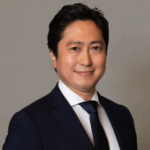
Attorney at Law, Tanabe & Partners
After graduating from the University of Tokyo Faculty of Law and Sophia University Law School, he worked as an attorney at Tanabe Sogo Law Office. After graduating from the National University of Singapore (LL.M.), he was transferred to a local law firm in Singapore and returned to Japan. After returning to Tanabe Sogo Law Office, he has been involved in a wide range of corporate legal affairs, focusing on corporate law and various disputes.
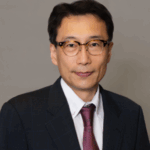
Professor, Chuo University Law School; Representative Director, BDTI
He graduated from the University of Tokyo Faculty of Law and worked as an assistant professor at the Tokyo Metropolitan University Faculty of Law before assuming his current position. His main areas of research and activities are corporate governance and venture business law. He is a member of the Corporate Governance Study Group of the Ministry of Economy, Trade and Industry, the Study Group on Corporate Governance Systems, and the M&A Study Group of the Economic and Social Research Institute, Cabinet Office. His publications include "Corporate Law (3rd edition co-authored by Yuhikaku 2015)," "Casebook Corporate Law (5th edition co-authored by Kobundo 2015)," "Corporate Governance that is Not a Matter of Other People's Affairs," "Can Corporate Law Prevent Corporate Scandals?" "Convergence of Corporate Governance and Its Background," Law Jiho, vol. 84, no. 10 (2012), "Corporate Governance in Japan. (2012), "Strengthening the Supervisory Functions of the Board of Directors (1) (2) Outside Director and Corporate Auditor Systems, etc.," Shojihomu No. 1941 and No. 1942 (2011).

Attorney at Law, Director and Full-time Audit Committee Member of Coach A, Inc.
Graduated from Doshisha University Faculty of Law. After handling litigation-focused work at a law firm, transitioned to in-house counsel, spending over 20 years engaged in extensive legal and compliance work across four companies—Panasonic, Fast Retailing, USJ, and Coach A—each differing entirely in industry, scale, and culture. Currently serves as a full-time Audit and Supervisory Committee Member at Coach A, while also holding positions as an Outside Director at KPP Group Holdings Co., Ltd. and D.I. System Co., Ltd., and as an Outside Auditor at Prime Road Co., Ltd.
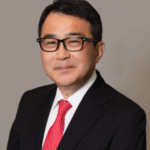
Representative Director, BDTI
Graduated from Waseda University, School of Political Science and Economics, and MIT Sloan School of Management. In 1985, he joined NTT as one of the first privatized employees and during his 10 years of service, he raised funds through foreign bonds, dealt with rating agencies, investor relations, financed overseas business investments, and served as the section manager in charge of business planning at the Shin-Etsu Branch (at that time). During this period, he was seconded to IBJ International plc. in London, U.K. (1986-1987) and studied at MIT Sloan School of Management (1990-1992). In 1996, he founded CICOM International (now CICOM Brains). In 2003, he co-founded the MOT program with the MIT Sloan School of Management. Since then, CICOM Brains has established offices in Singapore, Shanghai, Bangkok, and Jakarta, and is committed to building a foundation for business human resource development in Asia. CICOM BRAINS has been working hard to build a foundation for business human resource development in Asia. CICOM BRAINS will become a subsidiary of Human Associates Holdings, Inc. listed on the Mothers market in 2019, and he has been appointed as a director of Human Associates Holdings, Inc. The company will be acquired by MBK Wellness Holdings K.K., a subsidiary of Mitsui & Co. through TOB in 2022; he will retire as Representative Director of CICOM BRAINS K.K. in March 2025. In addition to this, he has served as Chairman of Nishida Gakuen Educational Corporation, which operates Alpha Medical and Welfare College in Machida City since 2015. He will serve as Chairman of the MIT Association of Japan for three years starting in 2019. He is the translator of "Distributed Leadership in Practice: The X Team.
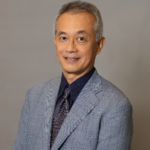
Pension Fund Association Pension Investment Department Senior Advisor
After graduating from Keio University with a degree in Economics, he joined Sumitomo Bank and later attended Columbia Business School in the United States. From 1995, he worked for 15 years at the New York branch, handling new business planning and special assignments. He led major projects in New York commissioned by Tokyo management, including in-house M&A initiatives and large-scale collaborations with other firms. With a focus on enhancing shareholder value, he also planned and executed various investments and capital strategies, including private equity, hedge funds, credit, hedging, and securitization.
From 2005 to 2010, he served as Deputy Head of the Americas Division while concurrently acting as CFO of the Americas Headquarters, overseeing operations across North and South America. After returning to Japan in 2010, he led the formulation and execution of international strategies for asset management at the bank.
Since 2014, he has been Director in charge of hedge fund investments and corporate governance at the Pension Fund Association. He serves on various expert committees and frequently speaks at conferences and seminars, both domestically and internationally, on the current state of corporate governance in Japan.
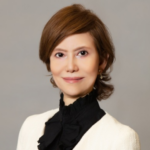
Sachiko Ichikawa, Partner, Tanabe & Partners
Graduated from the Faculty of Law at the University of Tokyo and earned an LL.M. from the Georgetown University Law Center. Admitted to practice in Japan (Dai-Ichi Tokyo Bar Association) and New York State, and also holds a U.S. Certified Public Accountant (CPA) qualification. Her areas of expertise include crisis management and litigation relating to accounting fraud and financial misconduct. As Chair of the Foreign Law Subcommittee of the Labor Law Committee of the Dai-Ichi Tokyo Bar Association, she has led research initiatives on business and human rights.
She is a SASB FSA Credential Holder and has served as a member of the GRI Labor Advisory Group and the Economic Impact Working Group, giving her extensive expertise in sustainability disclosure standards. She has previously served as an outside director or auditor of Anritsu Corporation, Ryohin Keikaku Co., Ltd. (MUJI), and Tokyo Electron Limited.
She currently serves as an Independent Director of Olympus Corporation, an Independent Director of Azbil Corporation, and a Director of the Sony Education Foundation. Drawing on her extensive experience, she also serves as a lecturer for BDTI’s director and executive training programs, leading discussions on the practical operation of companies with nominating committees, sustainability governance, internal controls, and risk management.