
Role Play

Role Play Course (Expert)

This is a director training program in which participants engage in role-play based on case studies designed by BDTI, inspired by real-world incidents. We warmly invite you to join, test your abilities as a board member, and deepen your understanding of boardroom dynamics.

Content

Fictional Case 1: A Letter from a Human Rights Activist

Uniwear, a clothing manufacturer and retailer, has received a letter from a human rights activist claiming that Xinjiang Uyghur cotton—linked to human rights abuses—is being used in its products. Let’s discuss at the board meeting how Uniwear should respond.

At Saji Soft, an IT system integrator, an activist fund holding 9.28% of shares submitted a shareholder proposal to appoint two directors. Although this proposal was rejected at the annual general meeting, it received a notably high level of support. Let’s discuss this further in a free-form discussion session.
Fictional Case 3: The Sudden Dismissal of a Professional Executive

At Libril Group, a manufacturer and seller of residential exterior and interior building materials, the professional executive—who was recruited by the founding family and was supposed to implement the mid-term business plan—suddenly resigned, prompting a motion at the board meeting. Let’s discuss this at the board.

At Shinkyo Bank, a retail bank with outstanding public funds, an unexpected hostile takeover bid (TOB) has been launched. The board of directors is obligated to provide shareholders with a formal opinion on the TOB. Let’s discuss at the board whether to support or oppose it.

summary
Subject:

(This course is taught in JAPANESE) Outside Directors, Inside Directors, and Board Secretariat Members
Prior attendance at the “Governance School” or “Advanced Director School” is not a prerequisite for enrollment.
However, we kindly request the participation of individuals with considerable knowledge.

Additionally, if you purchase the e-learning course at the same time as this program, you can take advantage of a 30% discount off the general course fee.

Capacity:
Max 15
Dates:

July 9, 2026

Hours:
9:00-17:00
Course fee:
Course Fee: 95,000 yen (including tax)
Corporate member price: 66,500 yen (including tax)
Venue:

Cicom Brains Learning Center Meeting Room
Akihabara Dai Building 7F, 1-18-13 Sotokanda, Chiyoda-ku, Tokyo 101-0021, Japan
https://www.cicombrains.com/about/access.html

Click here to apply:

Instructors

Sachiko Ichikawa

Sachiko Ichikawa, Partner, Tanabe & Partners

Graduated from the University of Tokyo, Faculty of Law. Obtained LLM from Georgetown University Law Center. Admitted to the Dai-Ichi Tokyo Bar Association and the State Bar of New York. She is a certified public accountant in the U.S. and specializes in crisis management and litigation handling of accounting fraud cases. She is a vice chair of the Foreign Law Subcommittee of the Labor Law Committee of the Dai-ichi Tokyo Bar Association, where she leads research on business and human rights, is a SASB FSA Credential Holders, a member of the GRI Labor Advisory Group, Economic Impact Working Group and is familiar with sustainability disclosure standards. She is currently an outside director of Tokyo Electron Limited, Olympus Corporation, Azbil Corporation and a board member of the Sony Education Foundation. Drawing on her experience, she has served as a lecturer at various BDTI Director training sessions, leading discussions on risks related to securities fraud litigation, company-with-committees practices, and the relationship between sustainability topics and the board of directors.
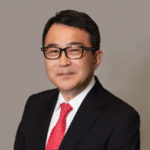
Tadayasu Nishida, BDTI Representative Director

Tadayasu Nishida graduated from the Waseda University School of Political Science and Economics and MIT Sloan School of Management. In 1985, he joined NTT as one of the first privatized employees, and during his 10-year tenure at NTT, he was in charge of raising funds through foreign bonds, dealing with rating agencies, investor relations, financing overseas business investment, and was the section manager in charge of business planning at the Shinetsu Branch Office (at that time). During this period, he was transferred to IBJ International plc. in London, England (1986-1987) and studied at MIT Sloan School of Management (1990-1992). In 1996, he founded Cicom International (now Cicom Brains), and in 2003, he established the MOT program in collaboration with MIT Sloan School of Management. Since then, he has established offices in Singapore, Shanghai, Bangkok, and Jakarta. Cicom Brains has been working hard to build a foundation for business human resource development in Asia. In 2019, Cicom has become a subsidiary of Human Associates Holdings, Inc. listed on the Mothers market, and he served as Board Member. The company was acquired by MBK Wellness Holdings K.K., a subsidiary of Mitsui & Co. through TOB in 2022. Tadayasu Nishida will retire as Representative Director of Cicom Brains in March 2025.
In addition to this, he has served as Chairman of the Board of Directors of Nishida Gakuen, which operates Alpha Medical and Welfare College in Machida City since 2015.
He will serve as President of the MIT Association of Japan for three years starting in 2019. He is the translator of “分散型リーダーシップの実践 Xチーム”.


Testimonials from Students

Because there’s a chance of encountering people with different perspectives, I was able to read the materials repeatedly from various angles and simulate how each person might act. Even though I usually participate in board meetings and consider how to convey my own ideas effectively to the CEO and executives, I hadn’t thought much about other outside directors or auditors. I realized I could use this approach to better prepare for future board meetings.
There’s a sense of being directly involved that you can’t experience in a case discussion. It’s very impactful and provides many valuable insights.
Through role-play, I was able to realistically experience a world I had never encountered before.
The role-play felt just like the real thing. The participants were highly qualified, well-prepared, and the discussions were extremely realistic. Rather than merely acting out roles or managing the meeting, we were able to engage in discussions as if it were an actual practice session.